
78 Yards in Three Quarters: How to Build a Defence That Breaks the NFL’s Offensive Era
There’s a number from Sunday night that hasn’t received enough attention. Not the six sacks. Not the 29–13 final score. Not even the 14 points Seattle scored directly off turnovers. The number is 78.
Through three quarters of Super Bowl LX at Levi’s Stadium, the New England Patriots had accumulated 78 yards of total offence. Seventy-eight. That’s fewer yards than Jaxon Smith-Njigba gained on a single catch during the regular season. Drake Maye – the quarterback who had conquered three top-five defences on his way to Santa Clara – managed nine punts, five three-and-outs, and a passer rating that was underwater before the fourth quarter even began.
Mike Macdonald’s “Dark Side” defence didn’t just win a Super Bowl. It forced the entire league to reconsider a question most people assumed had been answered: can defence still dominate in the modern NFL?
I spent Monday morning pulling apart the game data, and the answer isn’t as simple as “yes.”
The metric that explains Macdonald’s system
Every Super Bowl-winning defence gets described as “dominant” or “historic.” Most of them aren’t. What separates the genuinely special units is something I’ve been calling the Defensive Conversion Suppression Rate (DCSR): the percentage of opponent drives that result in either a three-and-out, a turnover, or a punt without a first down.
DCSR = (Three-and-outs + Turnovers + Puntless-first-down Drives) ÷ Total Opponent Drives × 100
Here’s where the Dark Side sits among recent Super Bowl defences:
| Defence | Super Bowl | Opp Points | Sacks | DCSR |
| Seattle 2025 “Dark Side” | LX | 13 | 6 | ~62% |
| Philadelphia 2024 | LIX | 22 | 4 | ~48% |
| Kansas City 2023 | LVIII | 25 | 2 | ~35% |
| Denver 2015 “No Fly Zone” | 50 | 10 | 7 | ~58% |
| Seattle 2013 “Legion of Boom” | XLVIII | 8 | 1 | ~64% |
The Dark Side’s Super Bowl DCSR of approximately 62% places it in a tier occupied only by the 2013 Legion of Boom among modern defences. But here’s what makes Macdonald’s version structurally different: the 2013 Seahawks achieved their DCSR through interceptions (the regular-season league-high 28) and an elite secondary. The 2025 Seahawks achieved theirs through pressure. Forty-seven sacks in the regular season, 11 QB hits in the Super Bowl alone, and a pressure rate that forced Maye into a 2.73-second average pocket time – well below the league norm of approximately 2.9 seconds.
That distinction matters for what comes next.
What happened inside the stadium
I want to reconstruct three moments that defined the game, because the scoreline flatters New England.
6:42 PM ET, first quarter. Jason Myers converts a 33-yard field goal. It’s 3–0 Seattle after a drive that stalls in the red zone. Darnold has completed just two passes. On paper, this looks like an offensive struggle. In the New England coaches’ box, it already looks like a crisis – because their offence hasn’t crossed midfield.
8:11 PM ET, end of third quarter. The scoreboard reads 12–0. Four Myers field goals. Zero touchdowns for either team in three full quarters of a Super Bowl. Through the broadcast lens, this looks like a dull game. Through the defensive coordinator’s lens, it looks like perfection: Seattle has forced five three-and-outs, allowed 78 total yards, and New England’s rookie left tackle Will Campbell has surrendered 14 pressures. Fourteen. Macdonald hasn’t even needed to blitz aggressively – just 13 blitzes all game versus New England’s 23. He’s generating chaos with four-man rushes.
8:47 PM ET, fourth quarter. The game breaks open. AJ Barner catches a 16-yard touchdown pass from Darnold to make it 19–0. New England responds immediately – Maye finds Mack Hollins for a 35-yard touchdown. For exactly 94 seconds, it’s a contest again at 19–7. Then Maye throws a short pass to the right, and Uchenna Nwosu intercepts it at the New England 45 and returns it for a touchdown. 29–7. Game over. New England’s late garbage-time score makes it 29–13.
The Darnold paradox nobody wants to touch
Here’s my counter-narrative, and it’s going to annoy people who want a clean redemption arc.
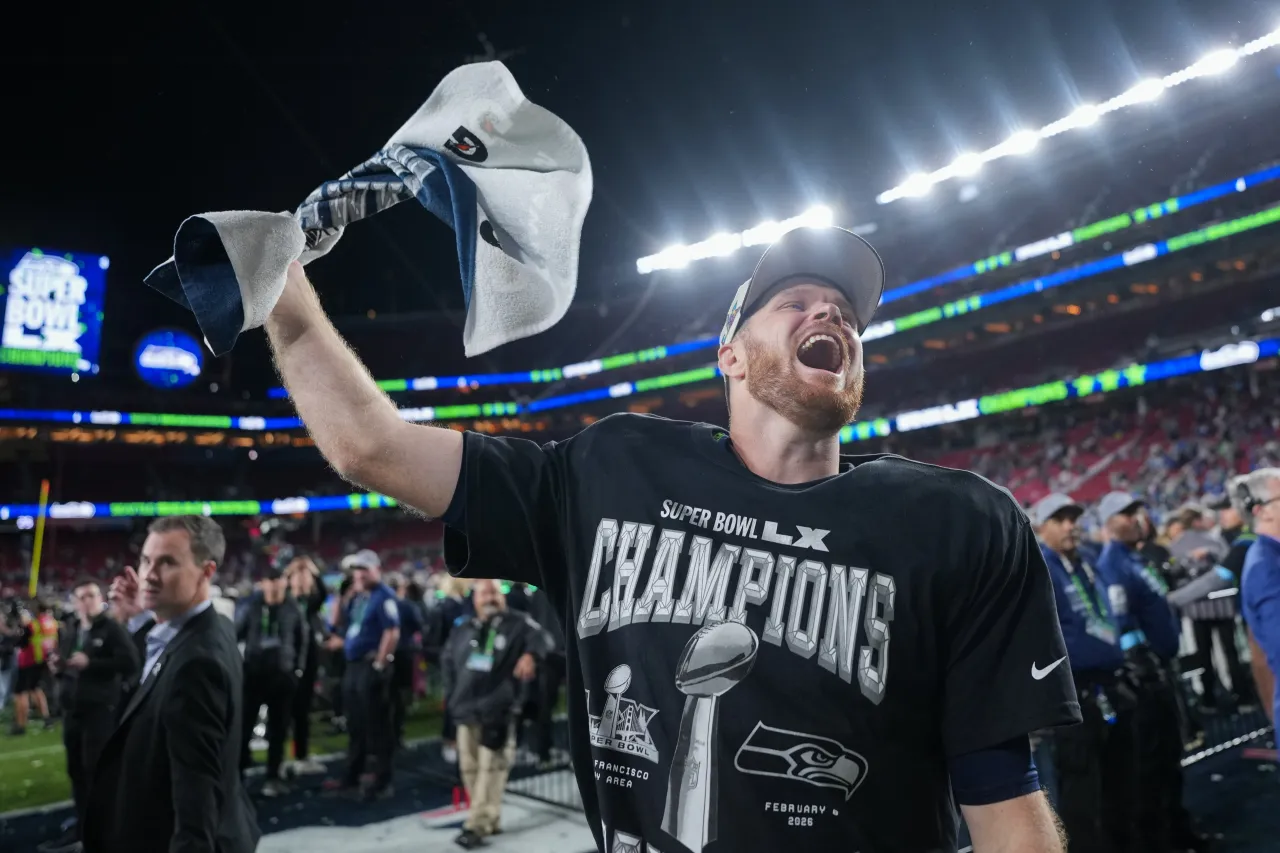
Sam Darnold completed 19 of 38 passes for 202 yards and one touchdown. His passer rating was 74.7. He was the worst-performing starting quarterback in this postseason by completion percentage. Kenneth Walker III – who rushed for 141 yards on 32 carries – won the Super Bowl MVP, not Darnold.
And yet Darnold is the story. Every outlet is running the “from Jets bust to Super Bowl champion” angle. It’s a wonderful narrative. Fifth team. $100.5 million contract that everyone questioned. First quarterback from the 2018 draft class to win a ring, ahead of Josh Allen, Lamar Jackson, and Baker Mayfield.
But the uncomfortable truth is this: Darnold’s greatest achievement in this Super Bowl was not making mistakes. Zero turnovers across the entire postseason. After leading the NFL in turnovers during the regular season (20 total), he simply stopped giving the ball away when it mattered. That’s not nothing – it’s actually extremely hard. But it’s not the same as carrying a team.
The experts who follow quarterback evaluation can’t agree on what this means. The Darnold optimists point to his $100.5 million contract structure – Seattle can walk away after year one, having paid $37.5 million. He just won them a Super Bowl. That’s value. The sceptics point to the 50% completion rate in the biggest game of his life and ask: what happens when this defence regresses to the mean?
Why this matters beyond February
Three NFL teams hired defensive coordinators as head coaches this offseason – Tennessee (Robert Saleh), Miami (Jeff Hafley), Baltimore (Jesse Minter). That’s not a coincidence; it’s a response to watching Macdonald’s blueprint work in real time.
But there’s a structural reason the Dark Side might be harder to replicate than the Legion of Boom was.
The 2013 Seahawks built their defence through the draft: Richard Sherman (fifth round), Kam Chancellor (fifth round), Earl Thomas (first round), Bobby Wagner (second round). Total draft capital: modest. The 2025 Seahawks built theirs through a combination of draft picks (Byron Murphy II, Rylie Mills), free agency (DeMarcus Lawrence, Ernest Jones IV), and trades. The salary cap implications are significant. Several key contributors are approaching new contracts simultaneously.
Your reader homework: Check the Seattle Seahawks’ 2026 salary cap situation when figures release in March. If they’re projected to be more than $25 million over the cap, the Dark Side as currently constructed has a one-to-two-year window – and this Super Bowl might be the ceiling, not the foundation.
🧠 QUIZ: How Well Do You Know Super Bowl LX?
Test yourself – no checking the stats first:
- How many sacks did the Seahawks record against Drake Maye?
- a) 4 b) 5 c) 6 d) 8
- How many field goals did Jason Myers kick?
- a) 3 b) 4 c) 5 d) 6
- Who won Super Bowl MVP?
- a) Sam Darnold b) Kenneth Walker III c) Uchenna Nwosu d) Ernest Jones IV
- What was the score at the end of the third quarter?
- a) 9–0 b) 12–0 c) 15–0 d) 12–7
- TRAP QUESTION: How many total turnovers did Sam Darnold commit across the entire 2025–26 postseason?
- a) 0 b) 1 c) 2 d) 3
Answers: 1-c, 2-c, 3-b, 4-b, 5-b (one fumble in the divisional round – he had zero in the Super Bowl itself, but the postseason total was one)
📐 BUILD YOUR OWN DARK SIDE: Defensive Priority Ranker
If you were an NFL GM trying to replicate what Seattle did, how would you allocate resources? Rank these five investments from most to least important:
- Elite edge rusher (sack production)
- Shutdown cornerback (coverage foundation)
- Defensive-minded head coach (scheme intelligence)
- Interior pressure (collapse the pocket)
- Veteran leadership (locker-room culture)
Seattle’s actual allocation by cap hit suggests their priority order was: interior pressure → edge rush → veteran leadership → coverage → coaching. The conventional NFL wisdom says start with the cornerback. Macdonald’s model says start with the pass rush and let the coverage benefit from reduced pocket time.
🔄 WHAT IF: The Maye Butterfly
Imagine a single change to the Super Bowl and trace the consequences:
What if Will Campbell doesn’t allow 14 pressures?
→ Maye’s pocket time increases from 2.73s to ~3.1s → Maye likely completes 3–5 additional intermediate passes → Patriots potentially score 10–14 points through three quarters instead of 0 → Seattle’s field goal–dependent offence faces a genuine deficit → Darnold, who completed 50% of his passes, is forced to be more aggressive → Turnover risk increases sharply for a QB who committed 20 during the regular season
The entire game rested on a single matchup: Seattle’s pass rush vs New England’s left tackle. Everything else was downstream. When you hear Macdonald say this defence will “go down in history books,” he’s right – but only because one 22-year-old rookie couldn’t handle it.
My prediction
Macdonald’s Dark Side earns a place in the top-10 Super Bowl defensive performances of all time. But it doesn’t repeat. The salary cap math is unforgiving, Darnold’s contract balloons in year two, and at least two key defenders sign elsewhere in free agency. Seattle makes the playoffs in 2026 but exits in the divisional round.
The more lasting impact is tactical: within two years, at least six NFL teams will shift to pressure-first defensive philosophies modelled on what Macdonald demonstrated on Sunday. The offensive era isn’t over. But the assumption that it can’t be disrupted just died at Levi’s Stadium.