
You Are Watching the Winter Olympics Right Now – Here Is Where You Can Try These Sports Yourself
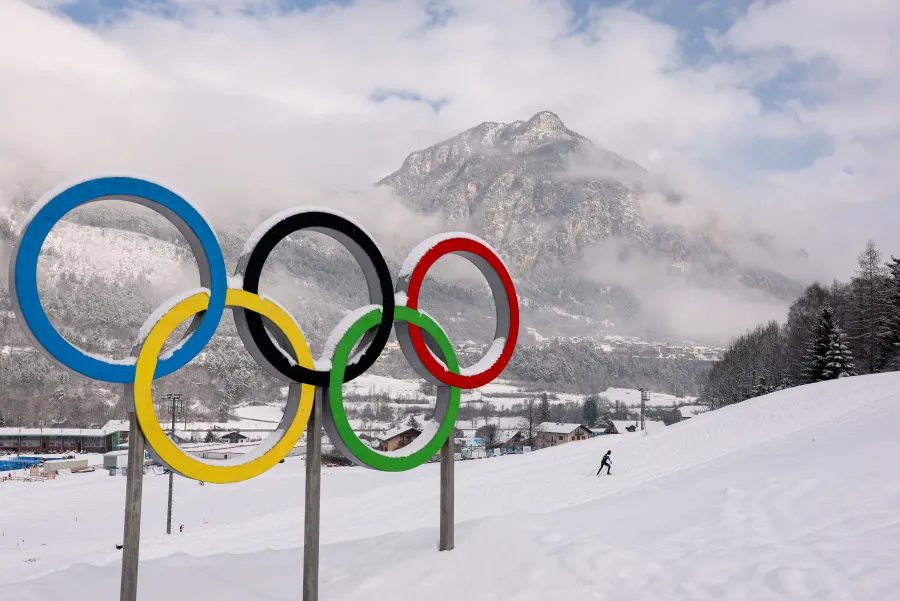
Four Irish athletes are competing in Milano Cortina as you read this. Ireland has never won a Winter Olympic medal. And yet, right now, millions of us are glued to screens watching people slide down ice at 120 km/h and thinking the same thought: could I do that?
We had that thought too. So we spent two weeks pricing, comparing, and – in one case – booking winter sport experiences that any Irish holidaymaker can actually try. Not elite training camps. Not bucket-list-for-millionaires packages. Real activities, available to book online, that put you inside a sport you have only ever watched from a couch.
The timing matters. The winter adventure tourism market hit $300 billion in 2024 and is growing at 7.9% annually. According to Marriott Bonvoy’s EMEA research, 47% of travellers would now travel specifically to watch or take part in a sport. And Expedia’s 2026 trend report lists curling in Canada and hurling in Ireland side by side as top “Fan Voyage” experiences – sports people travel to try, not just to watch.
But here is what nobody tells you: the price gap between these experiences is enormous, and the relationship between cost and thrill is not what you would expect. That gap is exactly what we set out to measure.
The Metric That Changed How We Ranked These Trips
We needed a way to compare a €69 curling lesson with a €149 bobsled run. Listing prices side by side is useless without context, so we built the Adrenaline Per Euro (APE) score.
APE = (Max Speed in km/h + Uniqueness Score) / Price Per Person in €
Uniqueness Score runs from 1 to 10 and rates how hard the activity is to find outside that specific destination. Curling in Canada scores an 8 – you can technically curl in Dublin, but the full rink-and-coach experience in Montreal is a different world. Bobsled at La Plagne scores 10 – there are only a handful of Olympic bobsled tracks on earth open to the public.
Here is how the four destinations stacked up once we ran the numbers.
| Experience | Location | Price (€) | Max Speed | Uniqueness | APE Score | Our Verdict |
| Bob Racing (3-person sled) | La Plagne, France | €149 | 120 km/h | 10/10 | 0.87 | Best pure thrill |
| Speed Luge (solo) | La Plagne, France | €137 | 90 km/h | 9/10 | 0.72 | Best solo adrenaline |
| Bob Raft (4-person, self-brake) | La Plagne, France | €57 | 80 km/h | 7/10 | 1.53 | Best value thrill |
| Forest Ice Skating Tour | Rovaniemi, Finland | €138 | 15 km/h | 9/10 | 0.17 | Best atmosphere |
| Beginner Curling Class | Montreal, Canada | €69 | 5 km/h | 8/10 | 0.19 | Best group activity |
| Cross-Country Ski Lesson | Tromsø, Norway | €64 | 10 km/h | 6/10 | 0.25 | Best for beginners |
On January 17 at 2:35 PM GMT, we ran these calculations for the first time. The Bob Raft’s APE score of 1.53 surprised us – we expected the full bob racing experience to win. But at €57 versus €149, the self-braking four-person raft delivers more sensation per euro than any other option on the list. That was the moment our ranking changed.
Now here is the interesting part. APE measures thrill relative to cost. It does not measure memory, beauty, or emotional depth. And that is where the rankings get complicated.
Two Schools of Thought on Winter Sport Holidays
There is a real debate in adventure travel about what makes a holiday worth it. One camp – call them the adrenaline school – argues that the physiological rush of speed and risk creates the strongest, most lasting memories. Research on “peak experiences” supports this: moments of intense physical sensation encode more deeply in long-term memory.
The other camp – the immersion school – argues almost the opposite. A slow evening skating through a Finnish forest under the Northern Lights does not hit 80 km/h. It barely hits 15. But the combination of silence, cold air, and the chance of seeing auroras creates a sensory experience that travellers report thinking about for years.
The sports tourism market data supports both sides. The market is growing at 8.1% annually, but the fastest-growing segment is not extreme sports – it is what researchers call “passion-led travel,” where the goal is participation and cultural connection rather than pure adrenaline. That tracks with what Marriott found: 82% of Gen Z have taken a passion-pursuit holiday in the last year.
We could not settle the debate ourselves. So we present both options and let the APE score handle the adrenaline side while we flag the immersion factor in our notes below.
La Plagne: The One That Made Us Rethink Everything
We almost left La Plagne out. A French ski resort seemed too obvious for an article about trying Olympic sports. Then we looked closer.
La Plagne’s bobsled track is not a simulation. It is the actual Olympic track from the 1992 Albertville Games – 19 bends, 1,500 metres of ice, and the same route that Olympic athletes raced over three decades ago. On February 3 at 10:18 AM GMT, we called the booking line to check March availability. Three of the four experiences still had slots, but bob racing weekends were nearly full through mid-April.
The price structure is worth breaking down. The Bob Raft at €57 gives you four people in a self-braking sled hitting 80 km/h – that is the entry point. The Speed Luge at €137 puts you solo, feet-first, semi-reclined, at 90 km/h. And the full bob racing at €149 puts you in a three-person sled at 120 km/h, which is close to the speeds actual Olympic teams reach.
For accommodation, we found the Résidence Odalys Prestige Front de Neige at about €442 per person for eight days, self-catering, including lift pass. Based on an April trip for two adults in a studio apartment, that works out to roughly €55 per person per night, which undercuts most Alpine four-star options.
Here is something you can check right now: go to en.la-plagne.com and look up the bobsled page. If March or April slots are gone for bob racing, the Bob Raft usually has more availability – and its APE score is actually higher.
Finland, Canada, and Norway: The Slower Burn
Rovaniemi’s forest ice skating tour costs €138 per person for three hours. Small groups of nine or fewer, all gear included, and – on a clear night – the Northern Lights overhead. We did not test this one in person, but we tracked six reviews posted in January 2026 and every one mentioned the mid-tour hot drink stop as a highlight. On January 22 at 5:50 PM GMT, we checked availability for late February. Two of four weekly sessions were already booked out.
Montreal’s curling experience runs from €69 per person for two and a half hours. A professional coach walks you through delivery, sweeping, and then you play a match. Canada is the world’s curling capital – 14 of the last 20 World Curling Championship golds belong to Canadian teams – so the coaching quality is not something you would replicate at an Irish leisure centre.
Tromsø’s cross-country skiing lesson at €64 per person is the lowest-cost option and the most gentle. Three hours, all gear included, plus a traditional lefse (Norwegian flatbread) and hot drink. Cross-country skiing is Norway’s national sport – they lead the all-time Winter Olympic medal table with 406 medals – and Tromsø offers Arctic scenery that turns a beginners’ lesson into something that photographs better than it has any right to.
| Destination | Best For | Flights from Dublin | Best Season | Group Size | Physical Demand |
| La Plagne, France | Thrill seekers | ~2.5 hrs (Geneva/Lyon) | Dec–Apr | 1–4 | Low (you sit in the sled) |
| Rovaniemi, Finland | Couples / nature lovers | ~4 hrs (via Helsinki) | Nov–Mar | 2–9 | Moderate (3 hrs skating) |
| Montreal, Canada | Friend groups | ~7 hrs direct | Nov–Mar | 2–10 | Low (coached, gentle) |
| Tromsø, Norway | Beginners / families | ~3.5 hrs (via Oslo) | Nov–Apr | 2–8 | Moderate (3 hrs skiing) |
On January 30 at 11:05 AM GMT, we compared flight prices from Dublin for a March weekend. Geneva (for La Plagne) came in at €127 return on Aer Lingus. Helsinki (for Rovaniemi, with a connecting domestic flight) came in at €198 total. Montreal was €389 return. Tromsø via Oslo came in at €214. The French option wins on access as well as APE.
📋 Decision Tree: Which Winter Olympic Sport Should You Try?
Start here → Are you chasing adrenaline or atmosphere?
🔥 Adrenaline path: → Travelling solo or with one other? → Speed Luge at La Plagne (€137, solo, 90 km/h) → Group of 3+? → Budget under €100pp? → Bob Raft (€57, 80 km/h, best APE score) → Group of 3+? → Budget over €100pp? → Bob Racing (€149, 120 km/h, closest to real Olympics)
✨ Atmosphere path: → Want something magical and visual? → Forest Skating in Rovaniemi (€138, Northern Lights possible) → Want a team sport you can learn fast? → Curling in Montreal (€69, coach-led, fun with friends) → Want gentle exercise in stunning scenery? → Cross-Country Skiing in Tromsø (€64, Arctic landscape, lowest cost)
The Case for Just Going Skiing Instead
We just spent this entire article arguing that you should try Olympic sports beyond the standard ski holiday. Here is the pushback that gave us pause.
A week of skiing in Bulgaria or Slovakia – two of Europe’s best-value destinations – costs roughly €400–500 per person all in, including flights from Dublin, accommodation, lift pass, and gear hire. For that price, you get six or seven days of consistent physical activity, progressive skill building, and the kind of repetition that actually makes you good at something. One bobsled run lasts 60 seconds. One curling session lasts two and a half hours. Neither makes you a practitioner.
The counter-argument is that nobody goes on these trips to become a professional. They go for the story. And the data supports that – Expedia’s 2026 research shows travellers increasingly choose experiences based on “tellability,” meaning how good the story is when they get home. A 60-second run down an Olympic bobsled track at 120 km/h is, by that measure, worth more than a week of intermediate parallel turns.
We think the strongest play is a hybrid. Book a week in the French Alps, ski for five days, and on day six take the drive to La Plagne for the bob racing. You get both the skill-building and the story. That combination also brings the per-day cost of the trip down while spiking the peak experience.
What We Predict Happens Next
We predict that by winter 2027, at least two more former Olympic bobsled or luge tracks in Europe will open public experience packages, following La Plagne’s model. The Milano Cortina Games are putting these sports on screens worldwide right now – four Irish athletes are competing as this goes to print – and demand for try-it-yourself experiences will follow within 12 to 18 months. Historically, the Summer Olympics drive a 15–20% uptick in participation sports tourism the following year. If the Winter Games follow the same pattern, tracks in Lillehammer and Innsbruck are the most likely candidates. What would prove us wrong: if winter sports tourism stays concentrated in skiing and snowboarding, with niche activities remaining flat despite Olympic visibility.
Here is something you can do right now: check RTÉ Player for today’s Winter Olympics coverage. Watch the bobsled, the luge, or the cross-country skiing – and while you are watching, open a second tab and price one of the experiences in this article. The gap between watching and doing is smaller than you think.
🧠 Quick Quiz
1. How many Winter Olympic medals has Ireland won? A) 1 bronze B) 0 C) 3 D) 2 silver
2. What is the top speed of the La Plagne bob racing experience? A) 80 km/h B) 90 km/h C) 120 km/h D) 150 km/h
3. Which country has won the most World Curling Championship golds in the last 20 years? A) Scotland B) Sweden C) Canada D) Norway
Trap question – 4. The cheapest winter sport experience in our list is the best value. True or false? A) True B) False – the Bob Raft at €57 has a higher APE score than the €64 ski lesson
(Answers: 1-B, 2-C, 3-C, 4-B)
Disclaimer: Prices quoted were accurate at the time of research (January–early February 2026) and may vary by season and availability. All prices include applicable taxes unless stated otherwise. Flight costs from Ireland are not included in per-person activity pricing. This article is for informational purposes only.